


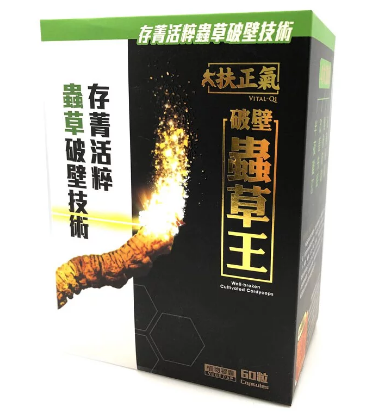
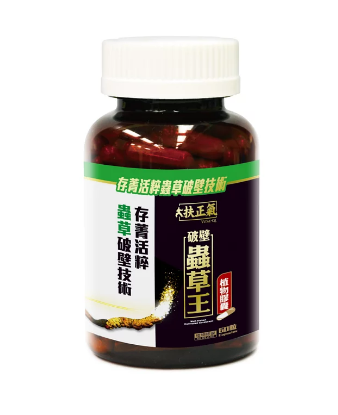
Description
"Broken Wall Cordyceps King" uses the revolutionary "cordyceps wall breaking technology" to completely break up the cell walls, allowing the essence of cordyceps polysaccharides and adenosine to be fully released, helping to relieve nasal allergy symptoms and improve sleep quality.
Main Ingredients
Cordyceps polysaccharide, broken cordyceps mycelium, silicon dioxide (E551), magnesium stearate (E572), calcium phosphate (E341), maitake mushroom extract, bird's nest sialic acid (this product contains additives E551, E572, E341)
Key Features
-Broken Cordyceps Adenosine No.1
- Clears the nose and improves respiratory tract
-Improve insomnia, protect lungs and kidneys
Suitable for
Suitable for people with allergic rhinitis, respiratory symptoms, insomnia, and lung and kidney protection
How to use
Health care: 2 times a day
Weak lungs and kidneys: 3-4 capsules per day
Packing Specifications
60 capsules per box, 350 mg per capsule, including capsules
Origin
Hongkong
Precautions
Use with caution in infants, pregnant women and those who are allergic to mushrooms
Health products, not a substitute for medical advice
Natural ingredients – each batch may vary slightly in color, texture and taste
Keep in a cool and dry place
Storage Method
Please store in a cool and dry place, out of reach of children.
Refund and Return Policy
This product is a non-refundable item, please read our Return/Refund Policy for more details.
This product is a non-refundable item, please read our Return/Refund Policy for more details.




 English
  Chinese